Maybe a grandparent in Italy still asks “Hai mangiato?” every Sunday on FaceTime. Maybe you are Italian yourself and want your child to answer in your language, not in English. Or maybe you simply believe that a second language is one of the best gifts you can give a child growing up in New York.
Whatever your reason is, the question is the same: when should children start, and what actually works? This guide looks at what research says about learning a language early, why the way children are taught matters as much as the age they start, and how to choose Italian classes for kids in NYC, from toddlers to teenagers.
Why start early? What the research says
Children are not magic sponges, and adults can absolutely learn Italian. But two well-known studies explain why starting early gives kids a real advantage, and what kind of exposure makes the difference.
Babies learn from people, not screens
In a study published in PNAS in 2003, researcher Patricia Kuhl and her team at the University of Washington exposed 9-month-old American babies to Mandarin Chinese: twelve 25-minute sessions over four weeks, in which native speakers read children’s books and played with toys while speaking Mandarin. After that short exposure, the babies could distinguish Mandarin sounds that babies who heard only English could not.
The second part of the study is the one every parent should know. Babies who watched the same Mandarin speakers on a DVD, or heard them on audio only, learned nothing. As Kuhl put it, “social interaction is an important component of language learning”. For young children, a language comes alive through a real person who talks, plays, sings and reacts. Cartoons and apps can be a nice extra, but they are not a substitute for a teacher and other kids in the room.
The window for grammar stays open longer than you think, but not forever
In 2018, cognitive scientists Joshua Hartshorne, Josh Tenenbaum and Steven Pinker analyzed a grammar quiz taken by nearly 670,000 people, published in the journal Cognition. Their conclusion, as summarized by MIT: grammar-learning ability remains strong until age 17 or 18, and then it drops. The practical takeaway the researchers gave was just as clear: to reach native-like grammar, learners should start by about 10 years old.
The study looked at English as a second language, but the lesson for families is general. Childhood and the teenage years are the best time to build a solid second language, and every year of early exposure counts.
That doesn’t mean it is ever too late: adults learn Italian successfully too, and we teach them every day in our adult Italian courses. It means that if you have the chance to start with your child now, it is worth taking it.
More than a language: heritage, family and culture
For many New York families, Italian is not just a school subject. It is the language of grandparents, cousins, summers in Italy, recipes and stories. Children who grow up speaking it can talk to relatives on their own terms, feel at home when they travel, and keep a family identity alive across generations.
This is at the heart of how we teach children at Speakitaly NYC. In our own words, our goal is “to support multilingual families who want to pass along their heritage and culture”. That is why our programs mix language with culture: cooking, art, music, stories and Italian traditions.
If your child is, or may become, an Italian citizen, language and paperwork often go hand in hand. Our page on Italian citizenship for a minor child explains how citizenship works for children born abroad after the 2025 reform, and we can help with both.
Play-based learning for younger children (ages 1 to 10)
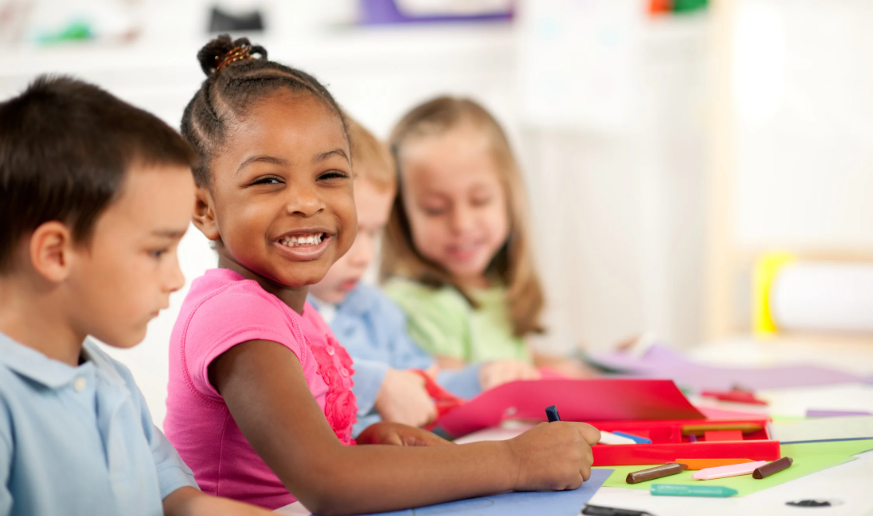
Young children don’t learn a language by studying it. They learn it by using it while they do something they enjoy. That is why our classes for younger kids are built around immersive, play-based activities rather than worksheets.
- Toddlers (1–3): in You & Me classes, children come with a caregiver for fun, open-level, play-based classes. Songs, movement and simple routines help them get used to the sounds of Italian from the very beginning.
- Preschoolers and early elementary (4–7): in Giardino dei Piccoli and Giardino dei Mezzani, children learn through engaging activities, games and short projects. Grammar, when it appears, is introduced gradually and adapted to their age.
- Enrichment (4–10): our Saturday Drop Off and Afternoon Italian Club let children “learn Italian naturally through projects, stories, music, and games”, with a focus on practical language and on interacting with other children.
- Culture through experience (4–12): cultural workshops and our Italian Day Camp during school holidays immerse kids in Italian language and culture for a few hours or a full day. For birthdays and special occasions, our private events for children include Italian cooking classes.
All of this rests on a clear method: our approach is anchored in the Common European Framework of Reference (CEFR) and combines communicative activities with active learning: group work, role plays and practice of all four skills, always in an age-appropriate way.
A more structured approach for pre-teens and teenagers (ages 11 to 16)
Older children need something different. Pure play stops being enough around the start of middle school: pre-teens and teens want to understand how the language works, and they are ready for it. In Giardino dei Grandi (11–13) and Giardino dei Teens (14–16), classes move to a more structured approach with grammar, reading and conversation.
This combination of analytical work and real conversation is what helps teenagers make the jump from “understanding some Italian” to using it independently. Our group courses for ages 6 and up follow clear CEFR levels, from A1 (absolute beginner) to B1+ (independent user), plus an “Emergent Bilingual” level for kids who already speak Italian comfortably at home.
For families who homeschool, or who want one-on-one support, our Italian for Homeschooling & Tutoring (ages 6–14) program can build an Italian curriculum and issue report cards that meet your state’s requirements.
Our Italian programs for children at a glance
| Program | Ages | Approach | Where |
| You & Me (with caregiver) | 1–3 | Play-based, open level | Manhattan, Brooklyn, online on request |
| Giardino dei Piccoli | 4–5 | Engaging activities and games | Manhattan, Brooklyn, online on request |
| Giardino dei Mezzani | 6–7 | Activities with gradual structure | Manhattan, Brooklyn, online |
| Giardino dei Mezzi Grandi | 8–10 | Activities, gradually more structured | Manhattan, Brooklyn, online |
| Giardino dei Grandi | 11–13 | Structured: grammar, reading, conversation | Manhattan, Brooklyn, online |
| Giardino dei Teens | 14–16 | Structured: grammar, reading, conversation | Manhattan, Brooklyn, online |
| Saturday Drop Off / Afternoon Italian Club | 4–10 / 4–8 | Enrichment: projects, stories, music, games | Manhattan, Brooklyn |
| Cultural Workshops / Day Camp | 4–12 / 4–10 | Immersion in language and culture | Manhattan, Brooklyn |
| Private classes | All ages | One-on-one, tailored | Online, at school or at home |
Age ranges are flexible: placement also depends on the child’s level, goals and background.
How to choose Italian lessons for kids in NYC
These are the questions we suggest asking any program before you enroll:
- Is the teaching adapted to my child’s age? A 4-year-old and a 14-year-old need completely different classes. Look for play-based learning for little ones and a more structured approach for teens.
- How big are the classes? Children speak more when groups are small. Our group classes are capped at 6 students.
- Are children placed by level, not only by age? A child who speaks Italian at home and a complete beginner should not sit in the same class just because they are both 8.
- Is there a clear framework? Programs anchored in the CEFR let you see real progress from one level to the next.
- Does it fit your week? Look for after-school slots, Saturday options and locations close to home or school, with online classes when life gets busy.
- Is culture part of the program? Food, music, stories and traditions are what make children want to keep speaking Italian.
How Speakitaly supports families throughout NYC
Speakitaly NYC teaches Italian in Manhattan, Brooklyn and online, with a method that is the result of our director’s almost two decades of experience in the field. For children, you can choose between:
- Group programs from age 1 to 16, in small classes of up to 6 students. The current term runs from September 14 to February 1, with 16 classes plus one free make-up class.
- Private classes for children, one-on-one with certified teachers, online, at school or at home.
- Homeschooling & tutoring for ages 6–14, on a rolling basis.
- Cultural workshops, Italian Day Camp during school holidays and private events such as kids’ cooking classes.
Not sure which class is right for your child? Write to us at children@speakitalynyc.com or call +1 (718) 717-3670. We will suggest the right group and level. When you are ready, you can find all forms on our registration page.
Sources
- Kuhl, P. K., Tsao, F.-M., & Liu, H.-M. (2003). Foreign-language experience in infancy: Effects of short-term exposure and social interaction on phonetic learning. PNAS, 100(15), 9096–9101. doi:10.1073/pnas.1532872100
- University of Washington News – Brief exposure to Mandarin can help American infants learn Chinese (17 Feb 2003). washington.edu
- Hartshorne, J. K., Tenenbaum, J. B., & Pinker, S. (2018). A critical period for second language acquisition: Evidence from 2/3 million English speakers. Cognition, 177, 263–277. doi:10.1016/j.cognition.2018.04.007
- MIT News – Cognitive scientists define critical period for learning language (1 May 2018). news.mit.edu
- New York State Education Department – New York State Seal of Biliteracy (NYSSB). nysed.gov
- N.Y. Education Law 815 – State seal of biliteracy. newyork.public.law
- Speakitaly NYC – Italian Language & Culture for Children and Italian Group Programs for Children (accessed 17 Nov 2026). speakitalynyc.com